Oct 09, 2026
How Adhesive Selection Influences Tape Performance on Different Surfaces
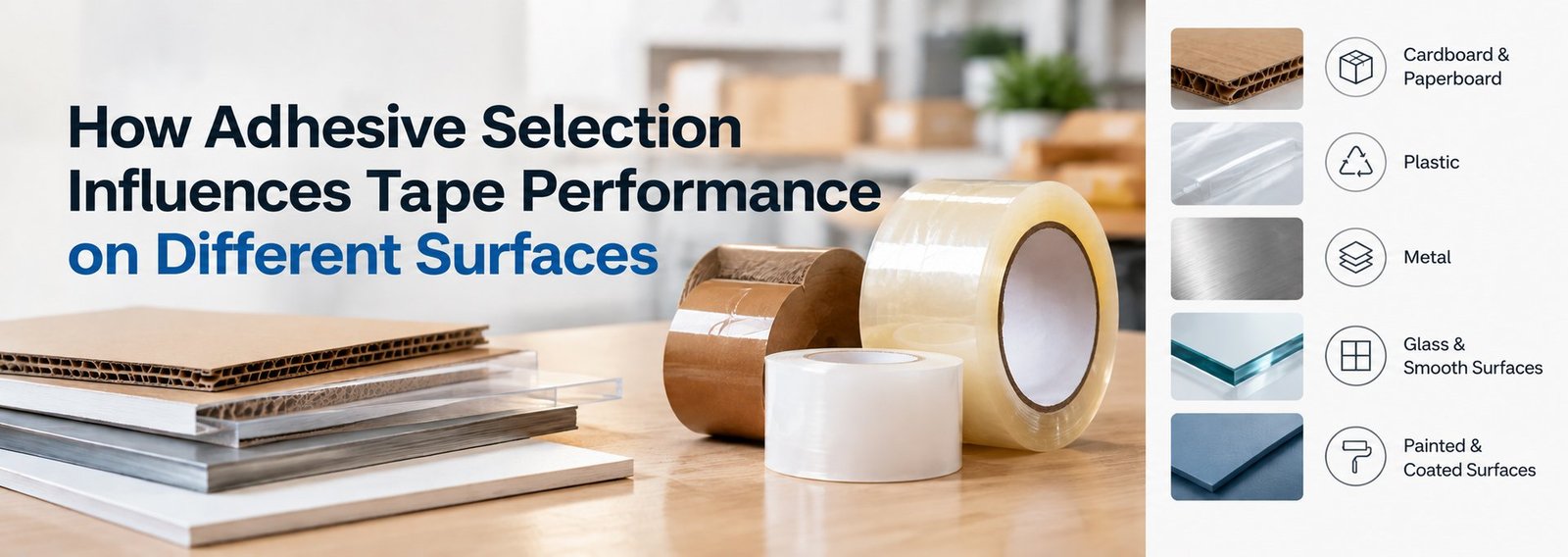
Adhesive tape performance depends on more than the tape material itself. The adhesive must also interact effectively with the surface it is applied to. Cardboard, paperboard, plastic, metal, glass, painted surfaces, and coated materials can behave differently during bonding.
Choosing an adhesive according to the surface can improve bonding reliability, reduce peeling and lifting, and help maintain consistent tape performance. Surface condition, material properties, application requirements, and environmental exposure should all be considered before selecting an adhesive tape.
Why Adhesive Selection Matters
Two surfaces may look similar but behave differently when tape is applied. Their texture, cleanliness, coating, flexibility, and surface energy can influence how effectively an adhesive establishes contact.
An adhesive that performs well on one material may not deliver the same result on another.
For industrial applications, unsuitable adhesive selection can lead to:
- Weak initial bonding
- Tape lifting from edges
- Peeling during handling
- Inconsistent sealing
- Increased rework
- Material wastage
- Packaging failures
Selecting the right adhesive therefore becomes an important part of achieving dependable tape performance.
How Different Surfaces Affect Adhesion
Cardboard and Paperboard
Cardboard and paperboard are common packaging surfaces. Their texture and absorbency can affect how an adhesive interacts with the material.
For carton sealing applications, the adhesive needs to establish sufficient contact with the surface while maintaining reliable bonding during handling and transportation.
Dust, loose fibres, moisture, and surface coatings can also influence adhesion.
Plastic Surfaces
Plastic surfaces can present different bonding conditions depending on the type of plastic and its surface characteristics.
Some plastics offer relatively low surface energy, making adhesive bonding more challenging. In such cases, selecting an appropriate adhesive and ensuring adequate surface preparation become particularly important.
Metal Surfaces
Metal can provide a smooth and stable bonding surface, but contamination can quickly affect adhesive performance.
Oil, grease, dust, oxidation, or other residues may prevent the adhesive from making consistent contact with the surface.
For industrial applications, surface cleanliness is therefore an important consideration before tape application.
Glass and Smooth Surfaces
Smooth surfaces can provide good contact when they are clean and dry. However, fingerprints, dust, moisture, or cleaning residues may reduce bonding reliability.
The adhesive should be selected according to the required holding strength and intended application.
Painted and Coated Surfaces
Painted or coated materials require additional consideration because the tape may bond to the coating rather than directly to the underlying material.
The quality and stability of the coating can influence overall performance. A strong adhesive bond is only useful if the surface coating itself remains stable.
Key Factors When Selecting an Adhesive
Surface Condition
A clean, dry, and stable surface generally provides better conditions for bonding.
Dust, oil, moisture, and loose particles can interfere with adhesive contact.
Surface Texture
Rough surfaces may contain small gaps between the adhesive and the material. Adhesives with suitable flow and contact characteristics may perform better depending on the application.
Surface Energy
The surface energy of a material influences how readily an adhesive can spread across it and establish contact.
This becomes particularly relevant when bonding certain plastics and other difficult surfaces.
Required Bond Strength
Not every application requires the same level of adhesion.
Temporary holding, carton sealing, component attachment, and industrial assembly can have very different performance requirements. The adhesive should therefore match the purpose of the tape.
Environmental Conditions
Temperature, humidity, moisture, and exposure conditions can influence adhesive behaviour.
The expected operating environment should be considered when selecting an adhesive rather than evaluating the tape only under normal room conditions.
Common Adhesive Types
Different adhesive technologies can be selected according to application requirements.
Hot Melt Adhesives
Hot melt adhesives can provide strong initial tack and are commonly considered for applications requiring quick bonding.
Acrylic Adhesives
Acrylic adhesives are known for their durability and can be suitable for applications where long term performance and environmental resistance are important.
Goodwill’s BOPP packing tape product range includes hot melt, solvent based acrylic, and water based acrylic adhesive options, allowing different specifications to be considered for specific packaging requirements.
The correct choice should depend on the actual surface and application rather than simply selecting an adhesive because it is widely used.
Best Practices for Reliable Adhesive Performance
Businesses can improve tape performance by following a few practical steps:
1. Identify the surface material before selecting the tape.
2. Check the surface condition for dust, oil, moisture, and loose particles.
3. Understand the application requirement, including holding strength and expected duration.
4. Consider environmental exposure such as heat, humidity, or moisture.
5. Select the adhesive according to the application, not only the tape backing.
6. Conduct a small trial before introducing a tape across a large production or packaging operation.
7. Monitor performance during actual use to identify peeling, lifting, or bonding problems.
Testing under real conditions can reveal performance differences that may not be obvious during initial selection.
Common Mistakes to Avoid
One of the most common mistakes is assuming that the same adhesive will perform equally well on every surface.
Other mistakes include:
- Applying tape to contaminated surfaces
- Ignoring surface coatings
- Choosing adhesive strength without considering the application
- Failing to test the tape before large scale use
- Selecting a tape only on the basis of price
- Ignoring the operating environment
A reliable tape selection process should consider the complete application rather than one specification in isolation.
A Practical Example
Consider a packaging operation that uses different carton materials across several product lines. One carton may have a relatively smooth surface while another may have a more textured or coated surface.
Using exactly the same adhesive specification without testing may result in differences in initial tack, edge lifting, or long term sealing performance.
A better approach is to evaluate the carton surface, packaging conditions, required holding strength, and expected storage and transportation environment before finalising the tape specification.
This approach helps businesses select a solution based on actual requirements rather than assumptions.
How Goodwill Adhesive Tapes Supports Packaging Requirements
Goodwill Adhesive Tapes & Foams India Pvt. Ltd. focuses on BOPP packing tape solutions for industrial and commercial packaging applications. Its product range includes tapes designed for carton sealing, bundling, shipping, warehousing, logistics, e commerce, and industrial packing.
The available adhesive options allow businesses to consider different bonding requirements when selecting a suitable tape specification.
For reliable adhesive tape solutions, the selection process should begin with the surface, application, environmental conditions, and required performance.
Quick Checklist
Before selecting an adhesive tape, ask:
- What material will the tape bond to?
- Is the surface clean and dry?
- Is the surface smooth, rough, coated, or flexible?
- Does the material have challenging bonding characteristics?
- What level of adhesion is required?
- How long must the bond remain reliable?
- Will the tape face heat, humidity, or moisture?
- Has the tape been tested on the actual surface?
- Is the selected adhesive appropriate for the application?
Frequently Asked Questions
1. Why does adhesive selection matter for tape performance?
Different surfaces interact differently with adhesives. Selecting a suitable adhesive can improve bonding reliability and reduce peeling or lifting.
2. Can the same adhesive work on every surface?
Not necessarily. Surface material, texture, cleanliness, coating, and environmental conditions can affect adhesive performance.
3. Does surface cleanliness affect tape adhesion?
Yes. Dust, oil, moisture, and other contaminants can interfere with contact between the adhesive and surface.
4. Why can some plastics be difficult to bond?
Certain plastics have low surface energy, which can make it more difficult for an adhesive to spread and establish a strong bond.
5. What adhesive types are available for BOPP packing tape?
Goodwill’s BOPP packing tape is available with hot melt, solvent based acrylic, and water based acrylic adhesive options.
6. Should adhesive selection consider temperature?
Yes. Expected temperature conditions can influence adhesive behaviour and should be considered during tape selection.
7. Why should businesses test tape before large scale use?
Testing on the actual surface and under expected conditions helps identify potential bonding problems before full scale implementation.
8. Does surface texture affect adhesion?
Yes. Rough or uneven surfaces can affect the amount of contact between the adhesive and the material.
9. Can coatings affect tape bonding?
Yes. The adhesive may bond to the coating rather than the underlying material, so coating stability is important.
10. Is stronger adhesive always better?
No. The best adhesive is the one that matches the surface and application requirements rather than simply having the highest possible adhesion.
Conclusion
Adhesive selection plays an important role in determining how reliably a tape performs on different surfaces. Material type, surface condition, texture, surface energy, environmental exposure, and required bond strength all need to be considered.
Rather than choosing tape based on a single specification, businesses should evaluate the complete application and test the selected solution under realistic conditions.
For businesses looking for dependable adhesive tape solutions, selecting the right adhesive according to the surface can help improve bonding consistency, reduce packaging problems, and support reliable day to day operations.
If you need help choosing the right adhesive tape for your packaging or industrial application, connect with Goodwill Adhesive Tapes & Foams for suitable tape solutions based on your surface, application requirements, and performance needs.