Jun 18, 2026
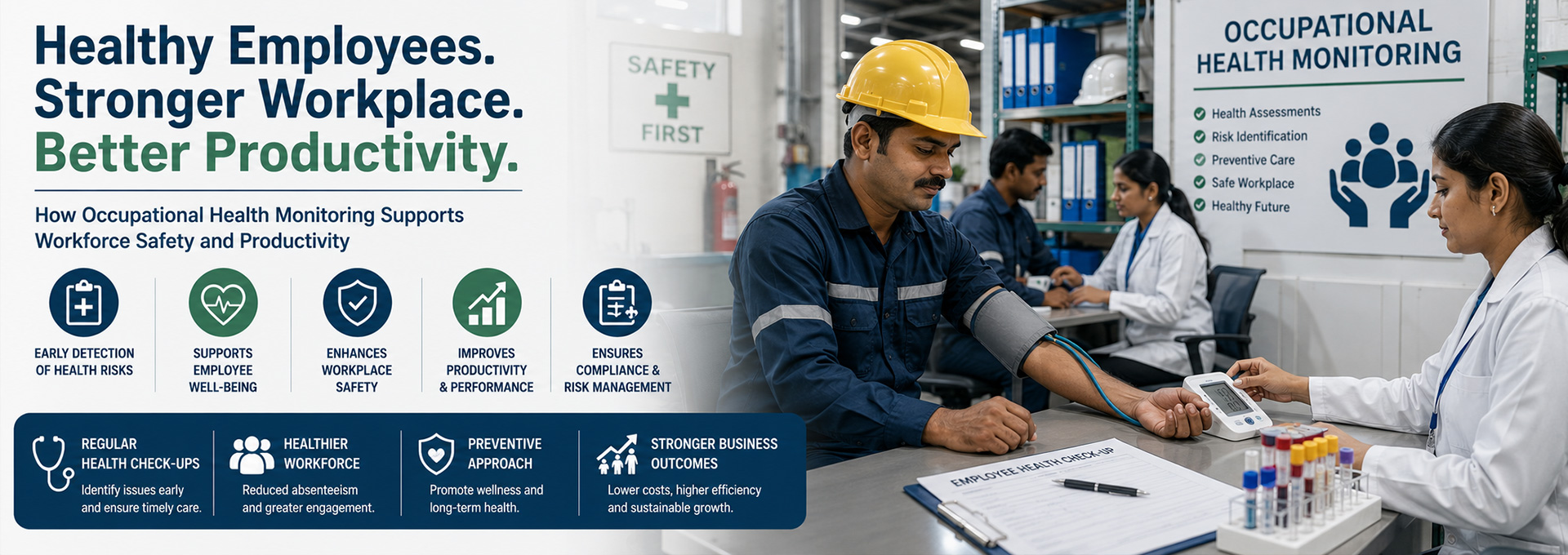
How Occupational Health Monitoring Supports Workforce Safety and Productivity
Workplace health has become an increasingly important factor in organisational success. Businesses today recognise that employee well-being directly influences productivity, operational efficiency, and long-term sustainability. While workplace safety measures often focus on preventing accidents and injuries, occupational health monitoring takes a broader approach by evaluating and managing health risks that may affect employees over time.
Occupational health monitoring involves the systematic assessment of employee health to identify potential risks associated with workplace environments, job responsibilities, and long-term exposure to occupational hazards. Through regular health evaluations and industrial health check-ups, organisations can create safer workplaces while supporting workforce performance and well-being.
Understanding Occupational Health Monitoring
Occupational health monitoring is a structured process that evaluates employee health and identifies conditions that may be linked to workplace activities. It helps organisations detect health concerns early and implement appropriate preventive measures.
Monitoring programs may include:
- Periodic health assessments
- Diagnostic screenings
- Medical examinations
- Fitness-for-work evaluations
- Exposure-related health monitoring
These assessments provide valuable insights into workforce health trends and help organisations make informed decisions regarding employee well-being.
Why Workforce Health Matters
Employees are among the most valuable assets of any organisation. A healthy workforce contributes to operational stability, improved performance, and reduced workplace disruptions.
When employee health is not monitored effectively, organisations may face challenges such as:
- Increased absenteeism
- Reduced productivity
- Higher healthcare-related costs
- Delayed project execution
- Increased workplace health risks
Proactive health monitoring helps organisations address potential issues before they develop into larger operational concerns.
Early Identification of Occupational Health Risks
Many workplace-related health conditions develop gradually and may not present immediate symptoms. Factors such as repetitive tasks, physical strain, environmental exposure, and workplace stress can contribute to long-term health concerns.
Occupational health monitoring supports early detection of:
- Respiratory conditions
- Musculoskeletal disorders
- Vision-related issues
- Lifestyle-related health risks
- Exposure-related medical concerns
Early identification enables timely medical intervention and reduces the likelihood of more serious health complications.
Supporting Workplace Safety Initiatives
Workplace safety and occupational health are closely connected. While safety programs focus on accident prevention, health monitoring helps identify conditions that may affect employee performance and overall workplace safety.
Health monitoring contributes to safer workplaces by:
- Identifying health-related risk factors
- Supporting employee fitness assessments
- Improving awareness of occupational hazards
- Reducing preventable health-related incidents
A healthier workforce is often better equipped to perform tasks safely and efficiently.
Impact on Productivity and Performance
Employee productivity is influenced by both physical and mental well-being. Health issues that remain undetected can affect concentration, energy levels, attendance, and overall work performance.
Organisations that invest in occupational health monitoring often benefit from:
- Improved workforce efficiency
- Reduced absenteeism
- Better employee engagement
- Enhanced job performance
- Increased operational continuity
Supporting employee health creates a more productive and resilient workforce.
Role of Industrial Health Check-Ups
Industrial health check-ups form an important part of occupational health monitoring programs. These assessments help evaluate employee health in relation to workplace conditions and job-specific requirements.
Industrial health screenings may assist organisations in:
- Establishing baseline health data
- Monitoring employee health trends
- Identifying workplace-related risks
- Supporting preventive healthcare initiatives
Regular health evaluations enable organisations to maintain a proactive approach to workforce well-being.
Occupational Health Monitoring and Regulatory Compliance
Many industries operate under health and safety regulations that require organisations to monitor employee well-being and manage occupational risks responsibly.
Health monitoring programs support compliance by:
- Maintaining health records
- Demonstrating commitment to employee welfare
- Supporting workplace health policies
- Strengthening organisational risk management practices
Compliance-focused health initiatives also contribute to stronger organisational credibility and workforce trust.
Building a Culture of Preventive Healthcare
Occupational health monitoring is most effective when integrated into a broader culture of preventive healthcare. Employees who understand the value of regular health assessments are more likely to participate in wellness initiatives and adopt healthier habits.
A preventive approach encourages:
- Health awareness
- Early medical consultation
- Routine health screening
- Long-term wellness management
This culture benefits both employees and employers by reducing health-related disruptions and improving overall workplace performance.
Long-Term Benefits for Organisations
Investing in occupational health monitoring delivers advantages that extend beyond immediate healthcare outcomes.
Long-term benefits include:
- Improved workforce retention
- Better employee morale
- Reduced healthcare-related expenses
- Stronger operational resilience
- Enhanced organisational productivity
By prioritising employee health, organisations create a foundation for sustainable growth and long-term success.
Supporting Workforce Health Through Professional Healthcare Services
Effective occupational health programs require reliable diagnostic services, accurate health assessments, and professional medical support.
Goodwill Biopharma Healthcare India Pvt. Ltd. delivers comprehensive diagnostic and industrial health assessment solutions that support employee well-being, encourage preventive healthcare practices, and contribute to healthier workplace environments. Through structured health evaluations and preventive healthcare initiatives, businesses can support employee well-being while improving operational performance.
Conclusion
Occupational health monitoring plays a vital role in protecting employee well-being, improving workplace safety, and enhancing organisational productivity. By identifying health risks early and supporting preventive healthcare strategies, businesses can create healthier and more efficient work environments.
As organisations continue to prioritise workforce welfare, occupational health monitoring will remain an essential component of long-term business sustainability. A proactive approach to employee health not only benefits individuals but also contributes to stronger, safer, and more productive organisations.