Jul 06, 2026
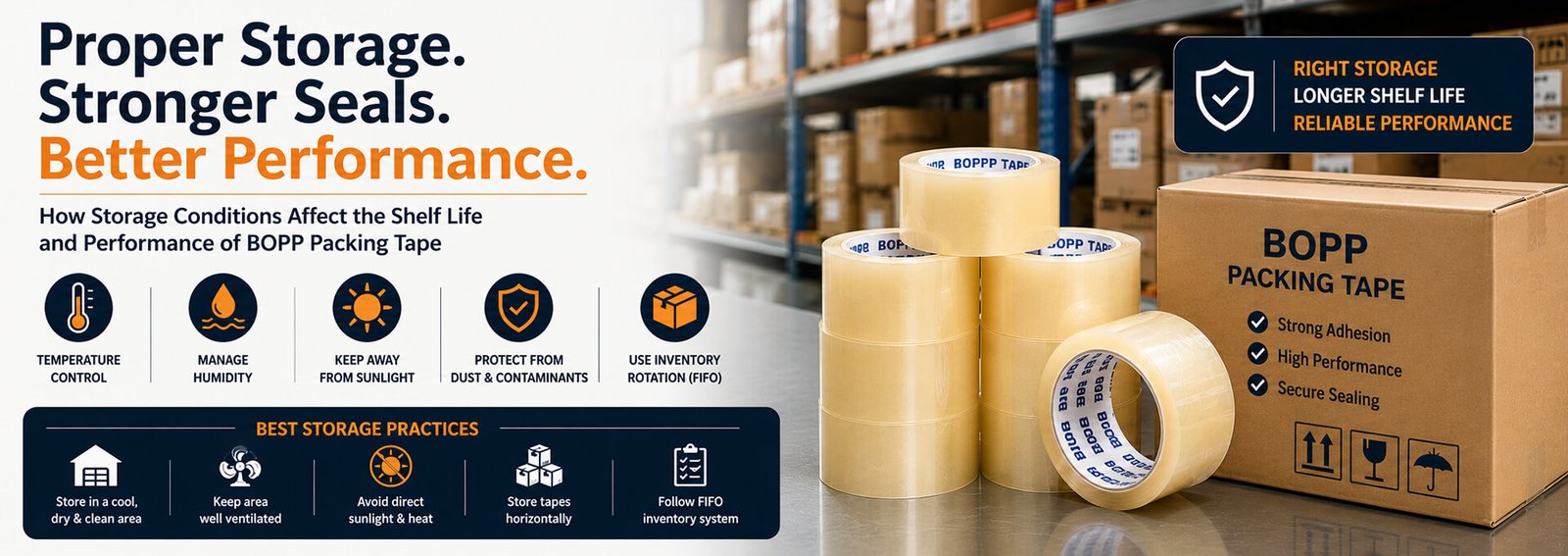
How Storage Conditions Affect the Shelf Life and Performance of BOPP Packing Tape
BOPP packing tape is widely used across manufacturing, warehousing, logistics, and e-commerce industries for securing cartons and protecting products during storage and transportation. While selecting the right tape is important, maintaining its performance after purchase is equally essential. Improper storage conditions can significantly affect the adhesive properties, film quality, and overall reliability of BOPP packing tape, leading to packaging failures and unnecessary operational costs.
Many businesses focus on choosing high-quality packaging materials but often overlook how storage environments influence product performance before the tape is even used. Understanding the relationship between storage conditions and shelf life helps manufacturers, distributors, and warehouse operators maintain consistent packaging quality and reduce material wastage.
Understanding the Shelf Life of BOPP Packing Tape
Shelf life refers to the period during which BOPP packing tape retains its intended performance characteristics when stored under appropriate conditions. Although adhesive tapes are manufactured for long-term durability, their effectiveness gradually changes if exposed to unsuitable environmental conditions.
The shelf life of BOPP packing tape depends on several factors, including:
- Storage temperature
- Humidity levels
- Exposure to sunlight
- Packaging conditions
- Storage duration
- Handling practices
Maintaining these factors within recommended ranges helps preserve both the adhesive system and the polypropylene film.
Why Proper Storage Matters
Industrial packaging operations rely on consistent sealing performance. If packing tape loses its adhesive strength or film flexibility during storage, it can affect packaging quality throughout the supply chain.
Proper storage helps businesses:
- Maintain adhesive performance
- Reduce packaging defects
- Minimise material wastage
- Improve operational consistency
- Extend product usability
Good storage practices protect inventory investments while ensuring dependable carton sealing during day-to-day operations.
Effect of Temperature on Tape Performance
Temperature is one of the most important factors affecting the shelf life of BOPP packing tape.
High Temperatures
Prolonged exposure to excessive heat may alter the adhesive layer, reducing its ability to create strong and consistent bonds. Heat can also affect the flexibility of the tape film, especially when products remain in storage for extended periods.
Potential issues include:
- Reduced adhesive efficiency
- Difficulty maintaining carton seals
- Increased adhesive residue during application
Low Temperatures
Very low temperatures may temporarily reduce the adhesive’s initial bonding performance, particularly if the tape is applied immediately after being stored in cold environments.
Allowing tape to reach normal room temperature before application generally helps restore optimal sealing performance.
Managing Humidity During Storage
Humidity influences both the adhesive tape and the cartons it is intended to seal.
High humidity may:
- Introduce excess moisture into storage environments
- Affect carton surface quality
- Influence bonding consistency during application
Dry and well-ventilated storage areas help maintain stable environmental conditions that support reliable packaging performance.
Protecting Tape from Sunlight and Dust
Direct exposure to sunlight and ultraviolet (UV) radiation may gradually affect packaging materials over time. Similarly, excessive dust accumulation can contaminate tape surfaces before application.
To reduce these risks, businesses should:
- Store tape in its original packaging
- Keep cartons closed until use
- Avoid direct sunlight
- Protect inventory from excessive dust and contaminants
These simple practices help preserve adhesive quality and improve storage efficiency.
Importance of Inventory Rotation
Packaging materials should be managed using systematic inventory practices rather than being stored indefinitely.
Many organisations follow a First In, First Out (FIFO) inventory approach, ensuring that older stock is used before newer inventory.
Benefits of inventory rotation include:
- Better stock management
- Reduced risk of ageing inventory
- Consistent packaging performance
- Lower material wastage
Routine inventory checks also help identify damaged or improperly stored materials before they enter production.
Best Practices for Warehouse Storage
Warehouses play a critical role in preserving packaging materials. Proper storage planning reduces environmental exposure and protects tape performance throughout its shelf life.
Recommended storage practices include:
- Store tapes in clean, dry environments.
- Avoid placing inventory near heat sources.
- Keep storage areas well ventilated.
- Store cartons horizontally without excessive stacking pressure.
- Maintain organised inventory for easier stock rotation.
Following standard warehouse practices contributes to more consistent packaging operations and improved inventory management.
Impact on Manufacturing and Logistics Operations
Reliable packaging materials support smooth manufacturing and logistics processes. When adhesive tapes perform consistently, businesses experience fewer packaging interruptions and lower operational losses.
Properly stored BOPP packing tape contributes to:
- Consistent carton sealing
- Improved warehouse efficiency
- Better product protection
- Reduced transportation-related packaging failures
- Higher customer satisfaction
Maintaining storage quality is therefore an important part of overall packaging management rather than simply an inventory concern.
Supporting High-Performance Packaging Solutions
Industrial packaging depends on reliable sealing materials that maintain their quality from storage through final application.
Goodwill Adhesive Tapes & Foams India Pvt. Ltd. offers high-performance adhesive tape solutions designed for manufacturing, warehousing, and industrial packaging applications. By combining quality packaging materials with proper storage practices, businesses can improve sealing consistency, reduce operational waste, and support efficient supply chain operations.
Conclusion
The long-term performance of BOPP packing tape depends not only on product quality but also on how it is stored before use. Environmental conditions such as temperature, humidity, sunlight exposure, and inventory management all influence adhesive reliability and packaging consistency.
By implementing proper storage practices and maintaining organised inventory systems, businesses can maximise the shelf life of adhesive tapes while ensuring dependable packaging performance. Protecting packaging materials during storage ultimately contributes to better product protection, smoother logistics operations, and improved operational efficiency.