Aug 14, 2026
How Tape Application Pressure Influences BOPP Packing Tape Bond Strength
When sealing cartons, the quality of the tape is only one factor that determines how reliably a package stays closed. Application pressure helps BOPP packing tape establish proper contact with the carton surface, allowing its pressure sensitive adhesive to interact more effectively with the packaging material. Consistent application can improve sealing reliability, reduce loose edges, and support more consistent packaging results.
BOPP packing tape is commonly used for carton sealing, shipping, warehousing, e commerce packaging, and industrial packing. However, even suitable tape may not perform as expected when application practices are inconsistent. Understanding the role of pressure can help packaging teams improve sealing quality without unnecessarily changing their tape or packaging process.
What Is Application Pressure?
Application pressure is the force applied to the tape after it is placed on the carton surface.
Cardboard and corrugated packaging materials are not perfectly smooth. Their surfaces can contain fibres, small gaps, uneven areas, and varying levels of porosity. When pressure is applied to the tape, the adhesive can make closer contact with these surface areas.
The objective is not simply to apply as much pressure as possible. The goal is to create consistent contact between the adhesive and the carton surface.
Why Application Pressure Matters
BOPP packing tape uses a pressure sensitive adhesive that develops adhesion when appropriate pressure is applied.
If the tape is placed on a carton without sufficient contact, some areas may not bond properly with the surface. This can contribute to loose edges, incomplete contact, or inconsistent sealing.
Consistent application pressure can help:
- Improve adhesive contact
- Reduce small gaps between tape and carton
- Support uniform sealing
- Reduce loose tape edges
- Improve packaging consistency
The ideal application can depend on the adhesive formulation, carton surface, application method, and surrounding conditions.
How Pressure Influences Adhesive Contact
The adhesive needs sufficient contact with the carton surface to develop an effective bond. Application pressure helps the adhesive conform to the available surface area.
The basic process can be understood as:
Tape placement → Pressure application → Better surface contact → Adhesive interaction → Consistent sealing
This is particularly relevant when sealing corrugated cartons because their surfaces can have irregularities that affect contact.
Pressure should therefore be applied consistently along the sealing path rather than only at selected points.
What Happens When Pressure Is Uneven?
If one part of the tape receives sufficient pressure while another section receives very little, adhesive contact may vary across the carton.
This can result in:
- Loose sections of tape
- Edges lifting during handling
- Inconsistent carton closure
- Increased need for resealing
- Differences in packaging quality
These issues can become more noticeable when cartons are stacked, moved through warehouses, or exposed to vibration during transportation.
Manual and Machine Application
Application pressure can vary depending on how BOPP packing tape is applied.
Manual Application
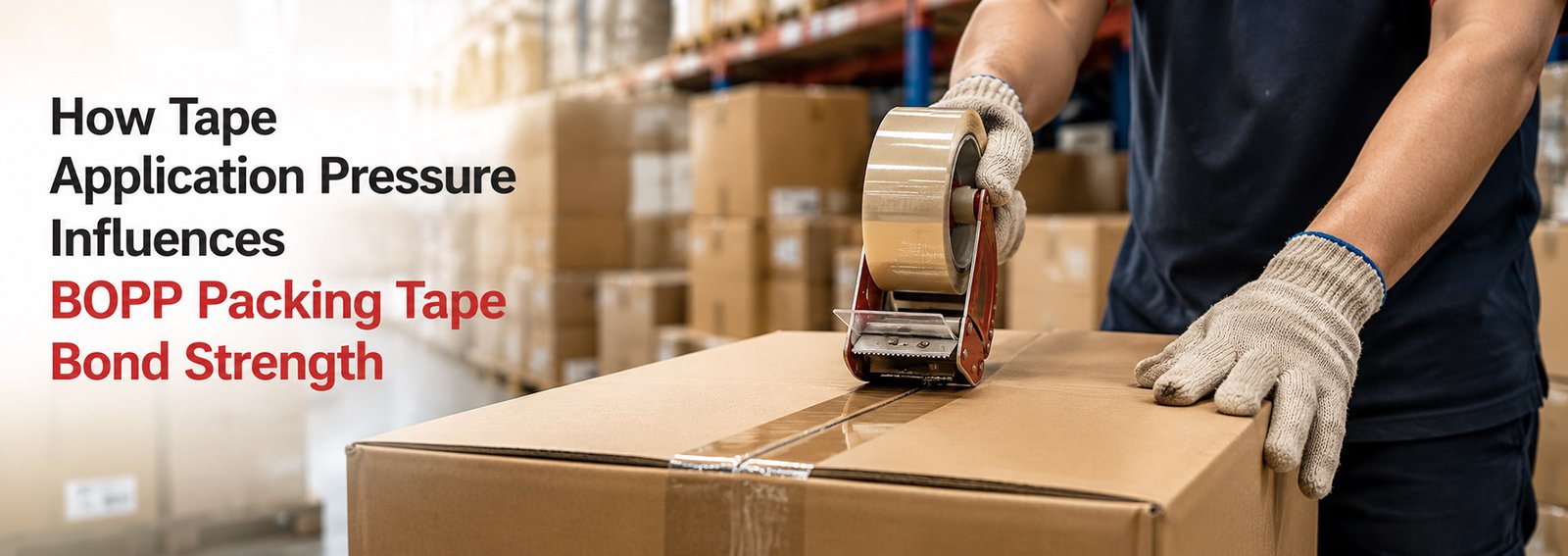
Manual carton sealing depends heavily on operator technique. Pressure can vary according to hand movement, application speed, tape alignment, and the type of dispenser being used.
Operators should:
- Keep the tape properly aligned
- Apply steady pressure
- Maintain contact along the sealing path
- Avoid leaving loose sections
- Pay attention to edges and corners
Consistent training can help reduce differences between operators.
Machine Application
Automated packaging equipment can provide greater consistency because the tape is applied according to controlled settings.
Machine based application can help maintain consistency in:
- Tape positioning
- Application speed
- Contact
- Tension
- Sealing sequence
However, equipment must still be correctly adjusted for the packaging application.
Surface Condition Also Matters
Application pressure is important, but it is not the only factor affecting tape adhesion.
The carton surface should be reasonably clean and free from excessive dust, loose fibres, oil, moisture, or other contaminants that could interfere with adhesive contact.
Packaging teams should consider:
- Carton material
- Surface condition
- Dust accumulation
- Moisture exposure
- Surface coatings
- Storage conditions
A suitable surface gives the adhesive a better opportunity to establish consistent contact.
Best Practices for BOPP Tape Application
Packaging teams can improve sealing consistency by following a few practical guidelines.
Keep the Surface Clean
Remove excessive dust and loose material before applying the tape.
Align the Tape Correctly
Position the tape along the intended sealing area before applying pressure.
Maintain Consistent Pressure
Apply steady pressure across the length of the tape instead of pressing only certain areas.
Avoid Excessive Tension
Unnecessary stretching during application can affect how the tape sits on the carton after application.
Check Edges and Corners
These areas can be more vulnerable to lifting and should receive proper contact.
Standardise Application Practices
When several employees handle packaging, consistent application procedures can help reduce variations in sealing quality.
Common Application Mistakes
Some recurring packaging problems may be related to application rather than the tape itself.
Common mistakes include:
- Applying tape to dusty surfaces
- Using insufficient pressure
- Applying uneven pressure
- Leaving loose edges
- Misaligning the tape
- Applying excessive tension
- Ignoring damaged carton surfaces
- Using inconsistent application methods
Before changing the tape specification, packaging teams should review the application process and determine where the problem is occurring.
Practical Example
Consider a warehouse where several employees seal cartons manually. One operator may apply steady pressure across the entire tape length, while another may place the tape quickly without ensuring full contact.
The cartons may therefore show different sealing performance even though the same tape is being used.
In such a situation, reviewing application technique, surface condition, alignment, and pressure may identify the cause before the business changes its tape product.
This highlights an important point: reliable packaging depends on both suitable tape selection and consistent application practices.
Quick Checklist
Before sealing cartons with BOPP packing tape, packaging teams can check:
- Is the carton surface reasonably clean?
- Is the tape correctly aligned?
- Is consistent pressure being applied?
- Are the edges firmly contacted?
- Is unnecessary tension being avoided?
- Are operators following the same application method?
- Is packaging equipment properly adjusted?
- Are recurring sealing problems being reviewed?
Frequently Asked Questions
1. Why does application pressure matter for BOPP packing tape?
Application pressure helps the adhesive establish better contact with the carton surface, supporting more consistent sealing.
2. Can insufficient pressure affect tape performance?
Yes. Poor contact between the adhesive and carton can contribute to weak sections or loose edges.
3. Does more pressure always create a stronger bond?
No. The goal is appropriate and consistent contact rather than excessive force.
4. Does carton surface condition affect adhesion?
Yes. Dust, moisture, loose fibres, oil, and certain surface coatings can influence adhesive contact.
5. Is application different for manual and machine sealing?
Yes. Manual sealing depends heavily on operator technique, while machines can provide greater consistency when correctly adjusted.
6. What should be checked if tape keeps lifting?
Review surface condition, application pressure, alignment, tape selection, carton quality, and surrounding conditions.
7. Where is BOPP packing tape commonly used?
It is commonly used for carton sealing, shipping, warehousing, e commerce packaging, and industrial packing applications.
8. Can consistent application improve packaging efficiency?
Yes. Consistent application can reduce loose sections, resealing requirements, and avoidable packaging variations.
Conclusion
Application pressure plays an important role in achieving consistent performance from BOPP packing tape. Appropriate pressure helps the adhesive establish contact with the carton surface, while consistent application can support reliable carton sealing.
However, pressure should be considered alongside tape selection, carton condition, surface cleanliness, application technique, equipment settings, and packaging requirements. Businesses that standardise these factors can create a more predictable sealing process and reduce avoidable packaging problems.
Goodwill Adhesive Tapes & Foams India Pvt. Ltd. provides BOPP packing tape solutions for carton sealing, shipping, bundling, and packaging applications. Its BOPP packing tape range includes different adhesive options and grades designed for various packaging requirements.