Nov 04, 2026
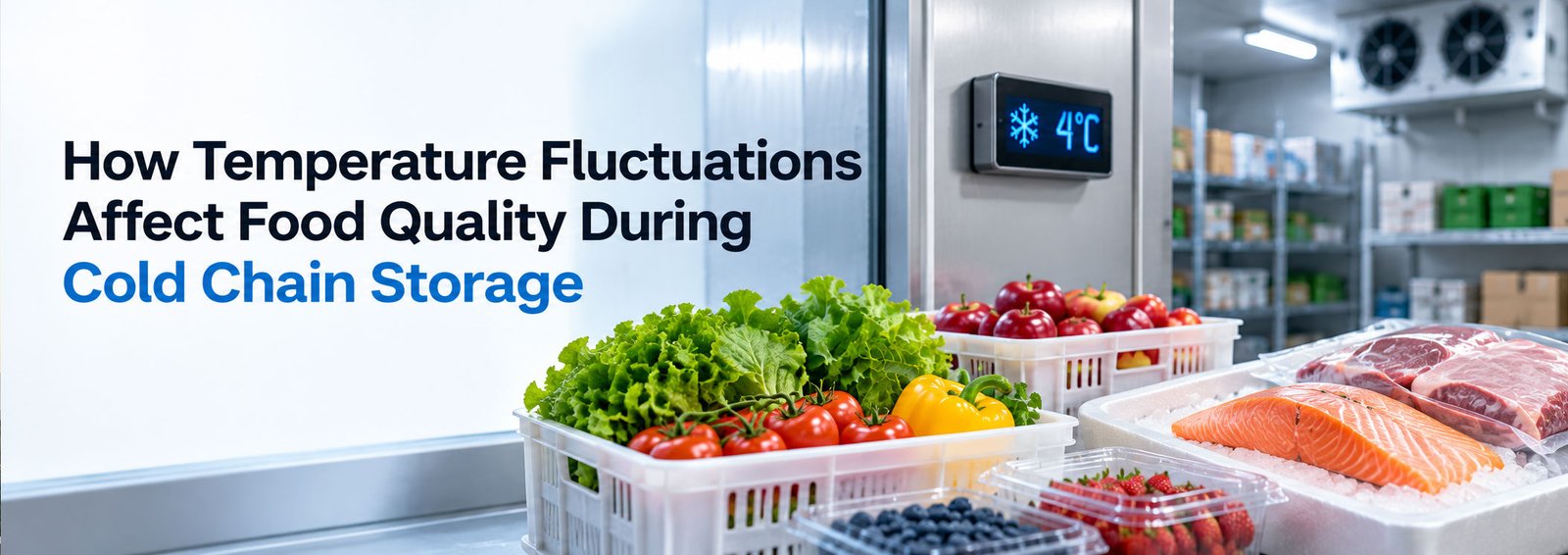
How Temperature Fluctuations Affect Food Quality During Cold Chain Storage
Food quality can change when products are stored under unsuitable temperature conditions. For businesses handling perishable food, maintaining appropriate storage conditions is essential for protecting freshness, texture, shelf life, and food safety. Temperature fluctuations during cold chain storage can affect food quality, increase spoilage risks, and make inventory management more difficult. Consistent temperature control, suitable handling practices, and proper stock rotation help businesses manage these risks throughout storage and distribution.
Why Temperature Stability Matters in Food Storage
Different food products have different storage requirements. Dairy products, fresh produce, meat, seafood, and frozen foods cannot all be stored under identical conditions.
Cold storage helps slow the deterioration of perishable foods, but the required conditions depend on the product. When temperatures rise above the appropriate range, some foods may deteriorate more quickly. Repeated temperature changes can also affect product consistency and storage quality.
For hotels, restaurants, catering businesses, and food distributors, maintaining suitable conditions is important for managing inventory and reducing avoidable product losses.
How Temperature Fluctuations Affect Food Quality
1. Changes in Freshness and Texture
Temperature variations can influence the texture, appearance, and overall quality of perishable foods. Fresh produce may lose its desirable condition, while dairy products and other sensitive foods can deteriorate when stored incorrectly.
Frozen foods may also experience quality changes when they partially thaw and refreeze. Ice crystal formation and moisture loss can affect texture, particularly in products such as meat and seafood.
2. Increased Risk of Food Spoilage
Refrigeration slows the growth of many microorganisms, but it does not make food permanently resistant to spoilage. If a product remains at an unsuitable temperature, deterioration may accelerate.
Importantly, harmful microorganisms do not always cause noticeable changes in smell, colour, or appearance. Businesses should therefore follow appropriate temperature and food safety procedures rather than relying only on visual inspection.
3. Reduced Usable Shelf Life
Food products have storage limits that depend on their type, condition, packaging, and temperature history. Exposure to unsuitable conditions may reduce the period for which a product retains acceptable quality.
This can create difficulties for businesses managing stock that must be used or distributed within a planned period. Maintaining appropriate storage conditions and tracking product dates helps support better inventory decisions.
4. Higher Risk of Product Losses
When stored food no longer meets the required quality or safety criteria, businesses may need to discard it. Temperature related deterioration can therefore contribute to wastage, replacement costs, and operational disruption.
A structured cold chain process helps businesses identify storage problems and manage products more responsibly.
Common Causes of Temperature Variations
Temperature fluctuations may occur at different stages of storage and handling.
- Frequent door opening: Warm air can enter a storage area when doors remain open or are opened repeatedly.
- Overloaded storage spaces: Poor product arrangement may obstruct airflow and create uneven cooling.
- Equipment or power interruptions: Refrigeration problems can affect the storage environment.
- Delayed handling: Products left outside suitable storage conditions during loading or unloading may warm up.
- Incorrect storage settings: Temperatures that do not match the product’s requirements can affect quality.
Identifying these possible causes helps businesses review their processes and reduce avoidable exposure.
Practical Ways to Maintain Consistent Cold Storage Conditions
Choose the Right Storage Conditions
Determine the appropriate temperature range for each food category using applicable food safety requirements and product specific instructions. Chilled and frozen products require different storage conditions, so they should not be managed using one general setting.
Monitor and Record Temperatures
Use suitable temperature measuring equipment and establish a consistent checking and recording procedure. Records can help staff identify unusual variations and investigate potential problems.
Where monitoring systems are available, businesses should follow their established procedures for responding to temperature deviations.
Organise Products for Proper Airflow
Arrange stock to allow suitable air circulation and avoid overloading storage spaces. Keep products in appropriate packaging and separate food categories according to hygiene requirements.
Good organisation also helps staff locate stock without unnecessary handling.
Follow Inventory Rotation Practices
Use a stock rotation method such as first in, first out when appropriate for the product and its labelling requirements. Track expiry or use by dates, receipt dates, and any relevant storage instructions.
Inventory rotation does not replace temperature control, but it helps businesses manage stock systematically.
Establish a Response Plan
Businesses should have a clear process for dealing with refrigeration failures, power interruptions, or recorded temperature deviations. Affected products should be assessed according to their temperature history and applicable food safety guidance.
If safety cannot be established, the food should not be distributed or served until the appropriate assessment has been completed.
The Role of Cold Chain Storage in Food Businesses
Cold chain storage connects suitable storage conditions with the handling and movement of temperature sensitive products. Its effectiveness depends on maintaining appropriate conditions across relevant stages rather than focusing only on the storage unit.
Goodwill FMCG India Pvt. Ltd. provides chilled storage, frozen storage, inventory handling, and temperature controlled logistics support for hotels, restaurants, catering businesses, and food industries.
These services address the storage and handling requirements of businesses that need suitable environments for different food categories. Packaging also plays a part in protecting products during storage and movement, as discussed in our article on how industrial packaging standards influence product safety and supply chain efficiency.
About Goodwill Empire
Goodwill Empire brings together business verticals serving different industry requirements. Its Goodwill FMCG India Pvt. Ltd. focuses on cold chain storage, chilled and frozen storage, inventory handling, and temperature controlled logistics for food businesses.
Through its business verticals, Goodwill Empire provides information about its services across multiple industries, helping businesses explore solutions relevant to their operational needs.
Frequently Asked Questions
What are temperature fluctuations in cold chain storage?
They are changes in storage temperature that may move conditions outside the appropriate range for a particular food product.
Why is temperature control important for food quality?
Suitable temperatures help slow deterioration and support the intended quality and storage life of perishable foods.
Can temperature changes affect frozen food?
Yes. Partial thawing and refreezing may affect texture, moisture retention, and overall quality.
Do all food products require the same storage temperature?
No. Storage requirements vary according to the food category, product characteristics, and applicable safety guidance.
Can food look normal but still be unsafe?
Yes. Harmful microorganisms may not produce noticeable changes in appearance, smell, or taste.
How can businesses monitor cold storage conditions?
They can use suitable temperature measuring equipment, routine checks, written records, and established response procedures.
What causes temperature fluctuations in storage facilities?
Possible causes include frequent door opening, obstructed airflow, equipment problems, power interruptions, and delayed handling.
How does inventory rotation help food businesses?
It helps staff track product dates and use stock systematically according to the applicable rotation and storage requirements.
What should businesses do after a temperature deviation?
They should assess the duration and extent of the deviation, review product requirements, and follow applicable food safety procedures before deciding whether products can be used.
Which businesses may need cold chain storage?
Hotels, restaurants, catering companies, food distributors, and other businesses handling temperature sensitive food may require suitable cold storage solutions.
Conclusion
Maintaining suitable temperatures throughout cold chain storage is essential for managing food quality, storage conditions, and inventory. Appropriate temperature checks, organised stock rotation, and responsible handling can help businesses reduce avoidable deterioration and make better storage decisions.
Businesses looking for chilled storage, frozen storage, or temperature controlled logistics can explore the services offered through Goodwill Empire and its Goodwill FMCG India Pvt. Ltd. business vertical to learn more about the available solutions.