Nov 12, 2026
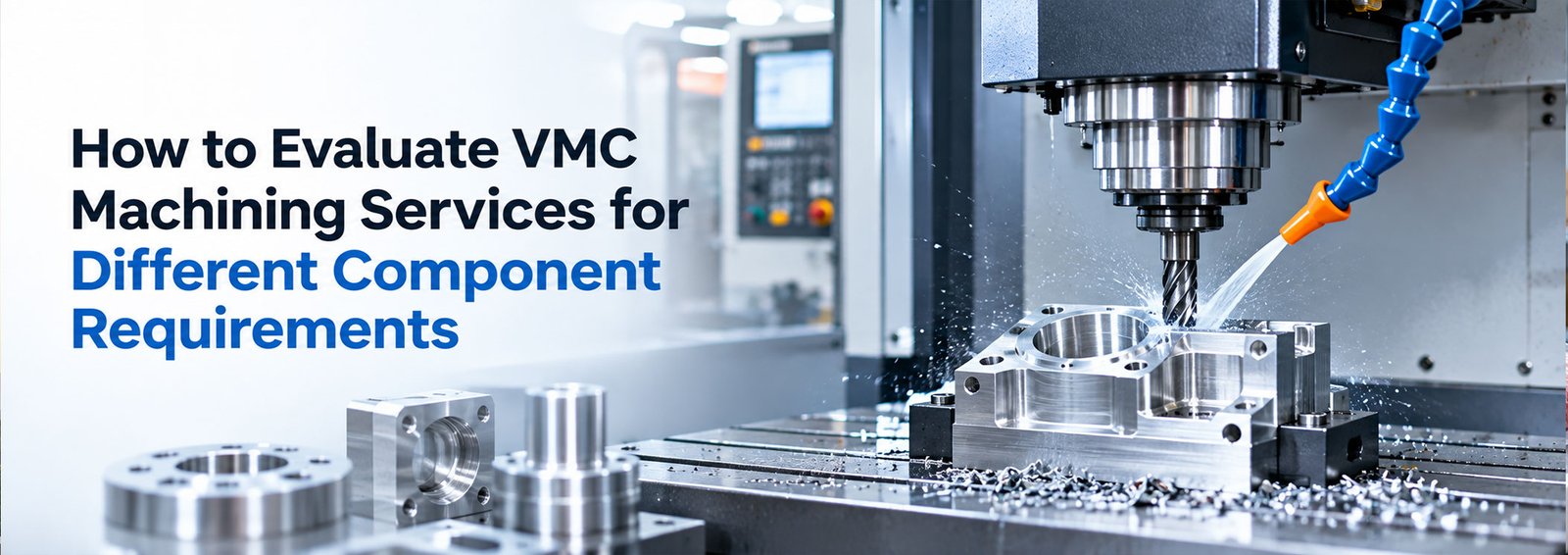
How to Evaluate VMC Machining Services for Different Component Requirements
Choosing a VMC machining service provider requires more than comparing prices or checking whether a component can be manufactured. Buyers need to assess dimensional requirements, material characteristics, surface finish, production volume, inspection procedures, and delivery expectations. The right evaluation process helps manufacturers identify a supplier whose machining approach aligns with the component’s functional requirements, quality expectations, and production schedule.
For procurement teams and manufacturing businesses, understanding these factors before finalising a supplier can reduce avoidable rework, improve communication, and support more predictable production planning.
What Is VMC Machining?
Vertical Machining Centre (VMC) machining is a computer numerical control (CNC) manufacturing process that uses a vertically oriented spindle to perform operations such as milling, drilling, and tapping, depending on the machine’s configuration and tooling.
VMC machining is commonly considered for components that require accurately positioned features, machined surfaces, holes, slots, or complex geometries. However, the suitability of a particular service provider depends on the component design, material, tolerances, production quantity, and available machining capabilities.
1. Start With the Component Drawing and Specifications
The technical drawing is the starting point for evaluating any machining requirement. It communicates what the finished component must achieve and gives the supplier a basis for assessing manufacturing feasibility.
Before requesting a quotation, prepare:
- A current engineering drawing with dimensions and tolerances
- Material grade and material condition, where applicable
- Critical hole positions, slots, threads, and other functional features
- Surface finish requirements for specified areas
- Required quantities and expected repeat order frequency
- Inspection and documentation requirements
Pay particular attention to dimensions that directly affect assembly or component performance. Not every dimension necessarily carries the same level of functional importance, so clearly identifying critical features helps both parties understand acceptance requirements.
2. Match Machining Capabilities to Component Complexity
Different components place different demands on machining operations. A relatively simple component with a few drilled holes may require a different setup from a part containing multiple faces, closely positioned features, or intricate pockets.
When evaluating a VMC machining service, discuss:
- The component’s overall dimensions and geometry
- The number of machining operations required
- Accessibility of features and tool approach
- Fixture and workholding requirements
- Whether multiple setups may be necessary
- The feasibility of producing the component within the specified tolerances
Ask the supplier to review the drawing before confirming feasibility. A component that appears straightforward on paper may involve additional setups or specialised tooling, affecting manufacturing time and cost.
3. Evaluate Material and Tolerance Requirements
Material selection influences cutting conditions, tool wear, machining time, and the achievable finish. Different metals and alloys respond differently to machining, so the supplier should understand the specified material before committing to a production plan.
Dimensional tolerances also require careful consideration. Tighter tolerances may demand more controlled machining conditions, additional measurements, or specialised inspection equipment.
During evaluation, clarify:
- Whether the proposed process is suitable for the specified material
- Which dimensions require closer inspection
- How dimensional conformity will be verified
- Whether material certificates or inspection reports are required
- How deviations will be handled if a component falls outside specification
Avoid assuming that every feature requires the tightest possible tolerance. Appropriate tolerances should be based on engineering and functional needs, since unnecessarily restrictive requirements can increase manufacturing complexity and cost.
4. Check Inspection and Quality Control Procedures
A component’s appearance alone cannot establish whether it meets its engineering specifications. A reliable evaluation should consider how the supplier verifies dimensions and records inspection results.
Ask how critical features will be measured, what inspection equipment is appropriate, and whether the results can be documented against the drawing.
Depending on the component, inspection may involve calibrated measuring instruments, gauges, coordinate measuring equipment, or other suitable methods. The method should match the required accuracy and feature geometry.
Also establish clear acceptance criteria before production begins. Agreeing on measurement methods, permissible deviations, and documentation requirements reduces the likelihood of disputes when finished components are delivered.
5. Consider Production Volume and Repeatability
A supplier’s suitability can vary according to order size and production frequency. A one-time prototype, a small batch, and a recurring production order can have different planning requirements.
For prototype or low-volume work, flexibility and drawing clarification may be particularly important. For repeat orders, buyers should understand how the supplier maintains consistency between batches.
Discuss setup requirements, expected production quantities, repeat order planning, and how revisions to drawings will be managed. If the component design changes, confirm that the latest approved revision will be used.
The goal is to assess whether the proposed production arrangement fits both current demand and foreseeable future requirements.
6. Compare Quotations Beyond the Unit Price
The lowest quotation does not automatically represent the best overall value. Differences in tooling, setup, inspection, finishing, packaging, and delivery terms can make two quotations difficult to compare directly.
Before making a decision, clarify whether the quoted price includes:
- Material procurement, if applicable
- Programming, setup, and tooling charges
- Inspection and quality documentation
- Secondary operations or finishing
- Packaging and transportation
- Taxes, payment terms, and delivery commitments
Request clarification wherever the scope is unclear. Comparing quotations on the same technical and commercial basis makes it easier to identify differences that could affect the final cost or delivery schedule.
7. Confirm Communication and Delivery Planning
Machining projects can encounter delays when drawings are incomplete, material availability changes, specifications remain unresolved, or revisions are introduced after production starts.
Evaluate how the supplier handles technical queries, drawing approvals, production updates, and changes to agreed requirements. Confirm the expected delivery schedule and identify any dependencies that could affect it.
For recurring requirements, establish a clear process for placing repeat orders and communicating forecast quantities. Consistent documentation and timely coordination can help prevent avoidable production interruptions.
Frequently Asked Questions
What should I check before selecting a VMC machining service?
Review technical feasibility, material compatibility, tolerance requirements, inspection procedures, production capacity, quotation scope, and delivery planning.
Which components are suitable for VMC machining?
Components requiring operations such as milling, drilling, tapping, pockets, slots, and accurately positioned features may be suitable, depending on geometry and machine capabilities.
Why are engineering drawings important for VMC machining?
Drawings communicate dimensions, tolerances, material specifications, and critical features. They help the supplier assess feasibility and prepare a more accurate quotation.
How do tolerances affect machining costs?
Tighter tolerances can require additional process control, measurement, tooling considerations, or inspection, potentially increasing production costs.
How can I assess machining quality before placing a large order?
Discuss inspection procedures and acceptance criteria. Where appropriate, consider approving a representative sample or first article before authorising larger production quantities.
What information is needed for a VMC machining quotation?
Provide the component drawing, material specification, required quantity, tolerances, surface finish requirements, inspection needs, and delivery expectations.
Does component complexity affect machining time?
Yes. Geometry, feature accessibility, material, tooling, workholding, and the number of required setups can influence machining time.
Why should I compare the full quotation scope?
Two suppliers may include different services in their quoted prices. Comparing equivalent scopes helps reveal additional charges and differences in deliverables.
Is VMC machining suitable for repeat production orders?
It can be suitable for repeat production when the component, machine configuration, process planning, and quality controls support the required consistency and volume.
What should be agreed before production starts?
Confirm the approved drawing revision, material, critical dimensions, acceptance criteria, inspection documentation, quantities, commercial terms, and delivery schedule.
About Goodwill Empire
Goodwill Empire brings together businesses across multiple industrial and service sectors, including Goodwill Machinery Metals & Minerals India Pvt. Ltd. Its broader business portfolio and commitment to customer satisfaction are outlined on the Goodwill Empire website and its business verticals page.
For a closer look at how machinery products are quality-checked, read How Goodwill Machinery Ensures Premium Quality in Industrial Lubricants and Machinery Oils.
Conclusion
Evaluating VMC machining services requires a structured review of component specifications, machining feasibility, material requirements, quality checks, production quantities, commercial terms, and delivery planning. A clear comparison helps procurement teams make informed decisions based on the component’s actual requirements rather than price alone.
For businesses exploring machining requirements, Goodwill Machinery Metals & Minerals India Pvt. Ltd. can be approached through Goodwill Empire to discuss the relevant requirement and confirm service suitability before proceeding.