Jun 26, 2026
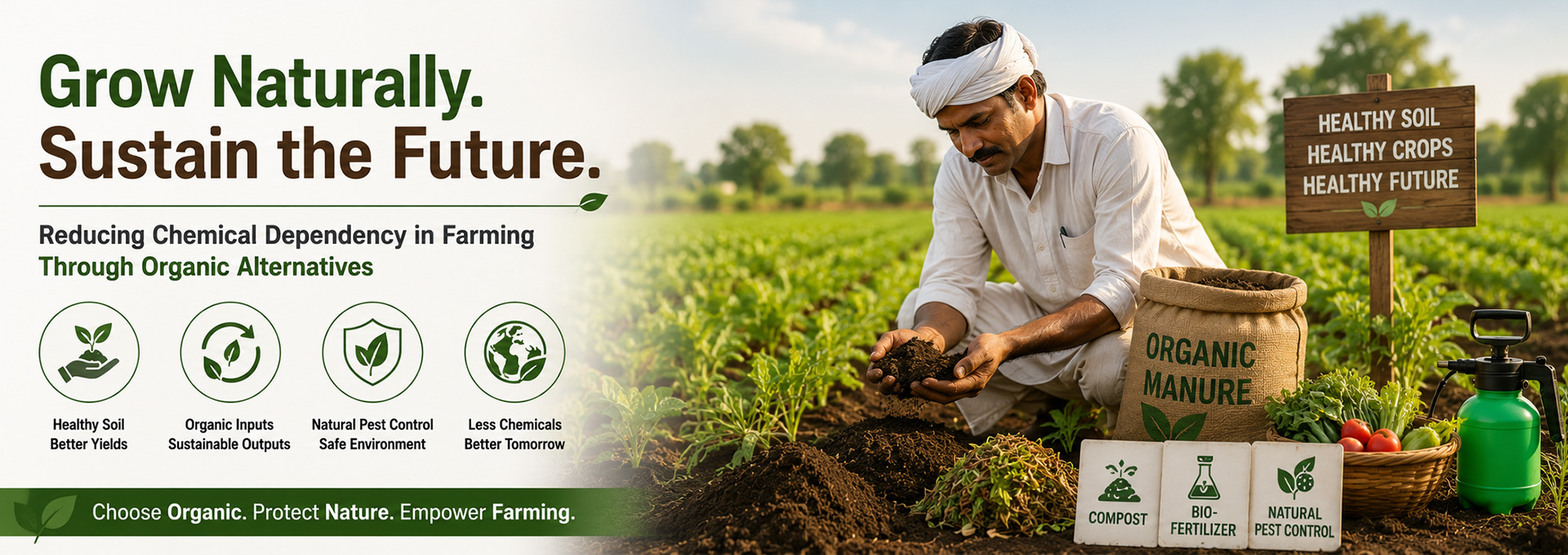
Reducing Chemical Dependency in Farming Through Organic Alternatives
Agriculture plays a vital role in supporting food production and economic development. Over the years, chemical fertilizers and pesticides have become widely used to increase crop yields and manage agricultural challenges. While these inputs have contributed to higher productivity, excessive reliance on chemical-based farming practices has also raised concerns about soil health, environmental sustainability, and long-term agricultural resilience.
As awareness about sustainable agriculture continues to grow, farmers and agricultural communities are increasingly exploring organic alternatives that support crop productivity while maintaining ecological balance. Organic farming inputs such as manure, compost, bio-fertilizers, and natural pest management solutions are becoming important tools for reducing chemical dependency and promoting healthier farming systems.
Understanding Chemical Dependency in Modern Agriculture
Chemical fertilizers and pesticides are often used to address nutrient deficiencies, improve crop growth, and control pests. However, long-term reliance on synthetic agricultural inputs can pose challenges to both productivity and environmental health.
Some concerns associated with excessive chemical usage include:
- Declining soil fertility over time
- Reduced microbial activity in soil
- Increased environmental pollution
- Water contamination risks
- Disruption of the natural ecological balance
While chemical inputs may provide short-term benefits, sustainable agricultural practices require a broader focus on long-term soil and ecosystem health.
Growing Need for Sustainable Farming Practices
Modern agriculture faces the challenge of increasing productivity while protecting natural resources. Sustainable farming aims to balance agricultural output with environmental responsibility by encouraging practices that preserve soil quality, biodiversity, and resource efficiency.
Organic alternatives support this approach by helping farmers:
- Improve soil structure and fertility
- Reduce environmental impact
- Enhance natural nutrient cycles
- Support long-term agricultural sustainability
As a result, many farming communities are integrating organic methods alongside modern agricultural practices to create more balanced production systems.
Role of Organic Manure in Soil Health
Organic manure is one of the most widely used natural alternatives to synthetic fertilizers. It provides essential nutrients while improving the physical properties of soil.
Benefits of organic manure include:
- Improved soil fertility
- Better moisture retention
- Enhanced soil aeration
- Increased microbial activity
Unlike synthetic fertilizers that primarily focus on nutrient delivery, organic manure contributes to overall soil development, supporting healthier growing conditions for crops.
Importance of Compost in Sustainable Agriculture
Compost is produced through the natural decomposition of organic materials and serves as a valuable soil amendment. It enriches soil with nutrients while supporting long-term agricultural productivity.
Compost helps:
- Improve soil structure
- Increase nutrient availability
- Support beneficial microorganisms
- Reduce organic waste through recycling
By returning organic matter to the soil, compost contributes to a more sustainable and environmentally responsible farming system.
Benefits of Bio-Fertilizers for Crop Growth
Bio-fertilizers are natural products that contain beneficial microorganisms capable of enhancing nutrient availability for plants. These microorganisms support essential biological processes that improve plant growth and soil health.
Advantages of bio-fertilizers include:
- Improved nutrient absorption
- Enhanced root development
- Better soil microbial activity
- Reduced dependence on synthetic fertilizers
As sustainable agriculture continues to evolve, bio-fertilizers are becoming an important component of integrated farming practices.
Natural Pest Management as an Alternative to Chemical Pesticides
Pest control remains an important aspect of crop protection. However, excessive use of chemical pesticides can affect beneficial organisms and contribute to environmental concerns.
Natural pest management solutions offer an alternative approach by supporting environmentally responsible farming practices.
These methods may help:
- Reduce chemical pesticide usage
- Protect beneficial insects and microorganisms
- Support ecological balance
- Promote sustainable crop management
Combining natural pest control methods with preventive agricultural practices can contribute to healthier farming environments.
Long-Term Impact on Soil Fertility
The quality of agricultural land plays a crucial role in determining crop performance, nutrient availability, and long-term farming productivity. Sustainable farming practices focus on maintaining and improving soil fertility rather than relying solely on external chemical inputs.
Organic alternatives contribute to long-term soil health by:
- Increasing organic matter content
- Supporting soil biodiversity
- Enhancing nutrient cycling
- Improving water retention capacity
These improvements help create more resilient agricultural systems capable of supporting future crop production.
Environmental Benefits of Reducing Chemical Dependency
Reducing chemical dependency benefits not only agriculture but also the surrounding environment. Organic farming practices support responsible resource management and help minimise negative environmental impacts.
Environmental benefits include:
- Reduced soil degradation
- Lower risk of water pollution
- Improved biodiversity
- Better ecosystem stability
- Sustainable use of natural resources
These outcomes contribute to broader environmental conservation goals while supporting agricultural productivity.
Supporting Sustainable Agriculture Through Organic Solutions
As agriculture continues to evolve, the demand for environmentally responsible farming practices is increasing. Organic alternatives provide practical solutions that support soil health, crop productivity, and long-term sustainability.
Goodwill Nuclear & Renewable Energy India Pvt. Ltd. promotes sustainable agricultural practices through organic solutions such as manure, compost, bio-fertilizers, and natural pest management products. By encouraging responsible resource utilisation and reducing dependency on synthetic agricultural inputs, farming systems can move toward more sustainable and environmentally conscious production methods.
Conclusion
Reducing chemical dependency in farming is an important step toward achieving sustainable agricultural development. Organic alternatives such as manure, compost, bio-fertilizers, and natural pest management solutions help improve soil health, support crop growth, and reduce environmental impact.
By adopting balanced farming practices that combine productivity with ecological responsibility, agricultural communities can create healthier and more resilient farming systems. Sustainable agriculture is not only about improving current yields but also about preserving the natural resources that future generations will depend upon.