May 12, 2026
Wealth Preservation vs Wealth Creation: Understanding Long-Term Financial Strategy
Long-term financial planning typically focuses on increasing asset value through structured investments, business growth opportunities, and stable income strategies. While wealth creation remains an important objective, long-term financial stability also depends on preserving existing assets and protecting them from unnecessary risks. A balanced financial strategy requires equal attention to both wealth creation and wealth preservation.
Many individuals focus heavily on increasing returns without considering how market fluctuations, inflation, taxation, and financial uncertainty can affect long-term financial security. Sustainable financial growth is achieved not only by building wealth but also by managing and protecting it strategically over time.
Understanding Wealth Creation
Wealth creation refers to the process of increasing financial assets and generating long-term value through investments, savings, and income-producing opportunities. It involves building financial strength that supports future goals such as retirement planning, business growth, property acquisition, or family security.
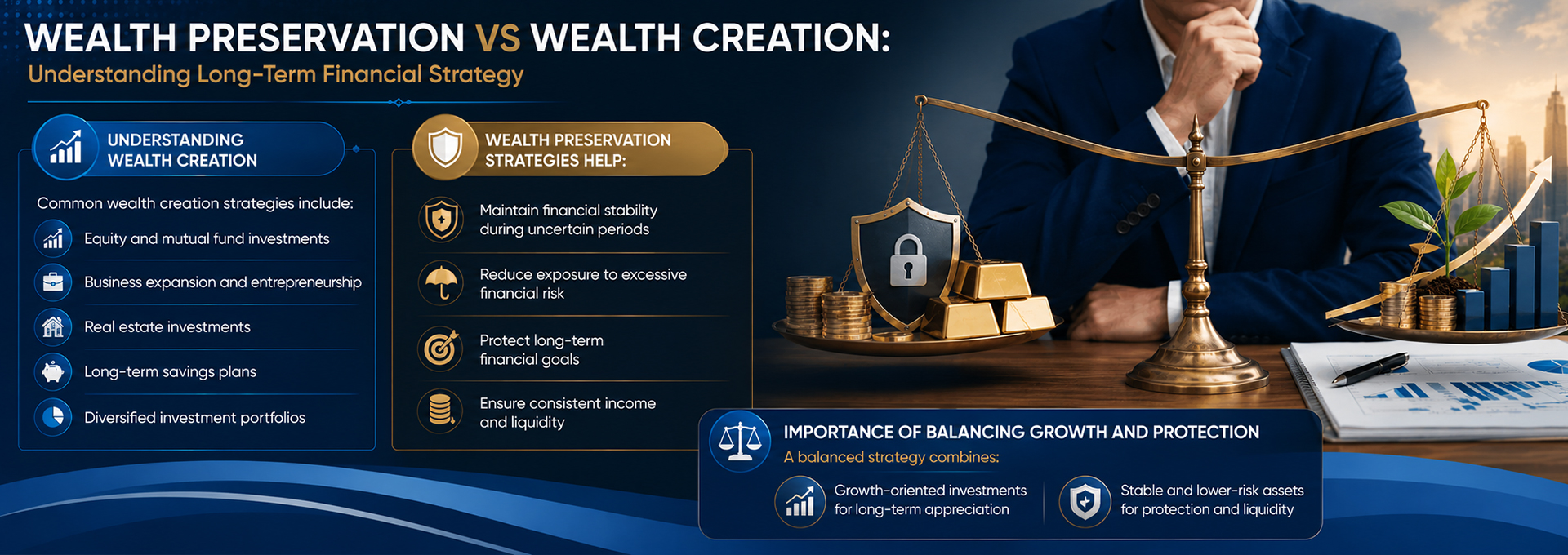
Common wealth creation strategies include:
- Equity and mutual fund investments
- Business expansion and entrepreneurship
- Real estate investments
- Long-term savings plans
- Diversified investment portfolios
The primary goal of wealth creation is capital growth over time. However, growth-oriented strategies often involve varying levels of financial risk.
What Is Wealth Preservation
Wealth preservation focuses on protecting accumulated assets from market volatility, inflation, economic uncertainty, and financial losses. As financial portfolios grow, preserving capital becomes increasingly important.
Wealth preservation strategies help:
- Maintain financial stability during uncertain periods
- Reduce exposure to excessive financial risk
- Protect long-term financial goals
- Ensure consistent income and liquidity
This approach becomes particularly important for individuals nearing retirement, business owners managing large assets, or families planning generational wealth transfer.
Importance of Balancing Growth and Protection
One of the most common financial planning mistakes is focusing entirely on aggressive wealth growth without considering risk management. High-return opportunities may generate profits, but they can also expose individuals to significant financial losses if not managed carefully.
A balanced strategy combines:
- Growth-oriented investments for long-term appreciation
- Stable and lower-risk assets for protection and liquidity
A well-balanced financial approach supports steady asset growth while reducing the impact of changing market conditions and economic uncertainty.
Role of Risk Management in Financial Strategy
Risk management plays a central role in both wealth creation and wealth preservation. Financial markets are influenced by economic conditions, interest rates, inflation, and global events that can affect investment performance.
Strategic financial planning involves:
- Diversifying investments across asset classes
- Evaluating risk tolerance
- Maintaining emergency financial reserves
- Periodically reviewing portfolio performance
These practices help reduce dependency on a single financial instrument or market condition.
Diversification as a Long-Term Strategy
Diversification is one of the most effective ways to balance wealth creation and preservation. A diversified portfolio spreads investments across different asset categories, reducing the impact of poor performance in any one sector.
A balanced financial portfolio may include:
- Equity investments for growth potential
- Fixed-income instruments for stability
- Real estate for long-term asset value
- Liquid funds for financial flexibility
Diversification supports steady financial progress while helping manage risk exposure.
Impact of Inflation on Wealth Preservation
Inflation gradually reduces purchasing power over time. Financial strategies focused solely on preserving money without generating growth may struggle to maintain long-term value.
For this reason, wealth preservation should not mean avoiding all risk. Instead, it should involve carefully selected investments that provide stability while still supporting moderate growth.
Balancing inflation protection with risk management is essential for maintaining financial strength over the long term.
Financial Planning Across Different Life Stages
The balance between wealth creation and wealth preservation changes throughout different stages of life.
Early Career Stage
Individuals may focus more on aggressive growth and long-term investments.
Mid-Career Stage
Financial planning often shifts toward balancing growth with family responsibilities, property planning, and risk management.
Retirement and Later Stages
Preservation of wealth, stable income generation, and financial security become higher priorities.
A well-structured financial strategy adapts according to changing financial goals and responsibilities.
Importance of Professional Financial Guidance
Managing financial growth and protection simultaneously requires careful planning and continuous evaluation. Market conditions, tax structures, and investment opportunities evolve over time, making professional guidance valuable for long-term decision-making.
Structured financial advisory services help individuals:
- Align investments with long-term goals
- Manage financial risks effectively
- Maintain portfolio balance
- Plan sustainable wealth strategies
Professional planning helps create financial discipline while improving long-term financial confidence.
Supporting Sustainable Financial Growth
Long-term financial success depends on creating strategies that support both capital growth and financial protection.
Goodwill Fortune 500 Wealth Advisory India Pvt. Ltd. provides wealth management, investment advisory, and financial planning services focused on sustainable financial growth. By combining strategic investment planning with risk-conscious financial management, individuals and businesses can build stronger and more stable financial futures.
Conclusion
Wealth creation and wealth preservation are both essential components of long-term financial strategy. While creating wealth helps achieve future goals and financial independence, preserving wealth ensures stability and protection during uncertain economic conditions.
A balanced financial approach that combines growth opportunities with risk management enables individuals to maintain financial security while continuing to build long-term value. Sustainable financial success is achieved not only by accumulating assets but also by protecting them through informed and disciplined financial planning.