Jul 22, 2026
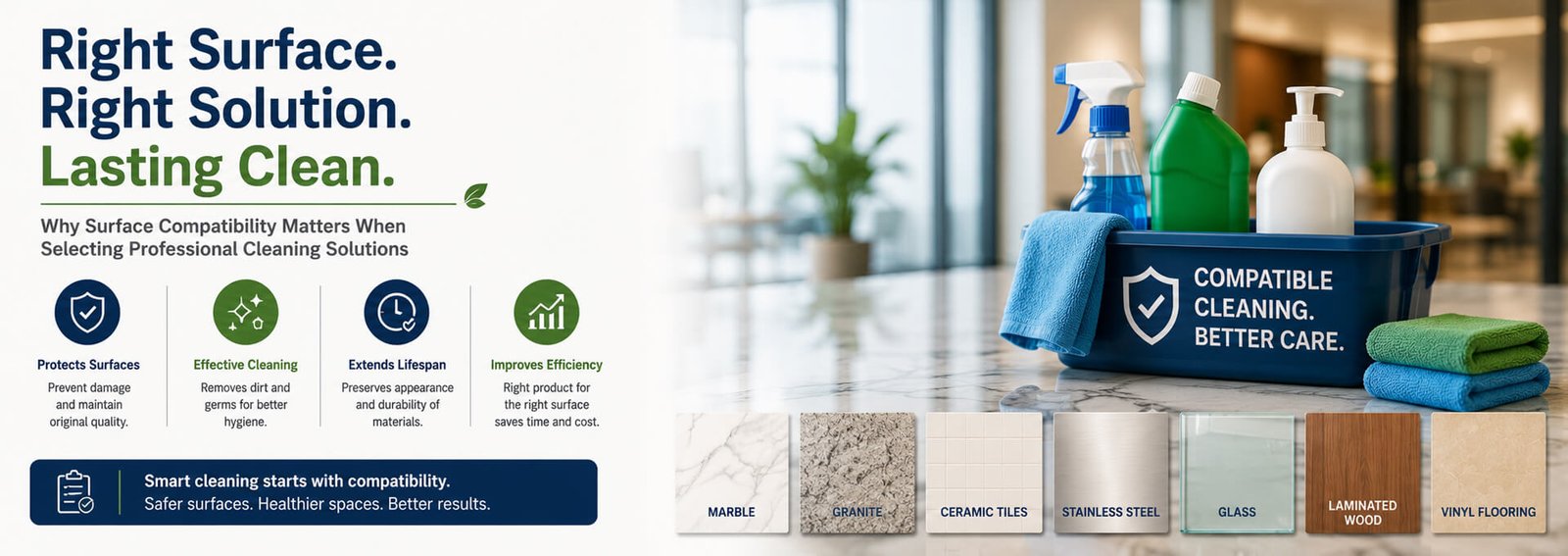
Why Surface Compatibility Matters When Selecting Professional Cleaning Solutions
Maintaining clean and hygienic environments is essential across commercial, industrial, healthcare, educational, and hospitality facilities. However, achieving effective cleaning involves more than simply selecting a cleaning product. Every surface has unique characteristics that influence how it responds to different cleaning solutions. Using a product that is unsuitable for a particular material can affect surface appearance, durability, and overall hygiene performance.
Surface compatibility refers to the ability of a cleaning solution to effectively remove dirt and contaminants without damaging or altering the material being cleaned. Understanding this relationship helps facility managers, housekeeping teams, and maintenance professionals choose appropriate cleaning solutions that support both hygiene standards and long-term asset protection.
Understanding Surface Compatibility
Surfaces found in commercial and industrial environments vary considerably in their composition, finish, and durability. Materials such as marble, granite, ceramic tiles, stainless steel, glass, vinyl flooring, and laminated wood each require different cleaning approaches.
Professional cleaning solutions are formulated to perform effectively on specific materials while maintaining their original condition. Selecting a compatible product helps ensure that cleaning processes remain effective without compromising the integrity of the surface.
Why Every Surface Requires a Different Cleaning Approach
No single cleaning solution is suitable for every surface. Each material reacts differently to moisture, chemical formulations, and cleaning methods.
For example:
- Natural stone surfaces may require pH-balanced cleaning solutions.
- Stainless steel benefits from products that minimise streaks and corrosion.
- Glass surfaces require residue-free formulations for improved clarity.
- Flooring materials often need cleaners that preserve protective finishes while removing dirt effectively.
Choosing products according to surface type helps maintain both cleanliness and material performance over time.
Potential Risks of Using Incompatible Cleaning Products
Selecting an unsuitable cleaning solution may reduce cleaning effectiveness and affect the condition of the surface being maintained.
Some common issues include:
- Loss of surface finish
- Discolouration or staining
- Residue accumulation
- Surface dullness
- Premature material wear
- Increased maintenance requirements
Using products designed specifically for compatible surfaces helps minimise these risks while supporting consistent cleaning results.
Importance of Product Formulation
Professional cleaning solutions are developed using formulations intended for specific cleaning requirements. Factors such as pH level, active ingredients, and intended application influence how a product performs on different surfaces.
Appropriate formulations help:
- Remove dirt and grease efficiently
- Maintain surface appearance
- Reduce unnecessary abrasion
- Support safe and effective cleaning practices
Understanding product specifications allows cleaning professionals to make informed decisions based on the surfaces they maintain.
Supporting Hygiene Without Compromising Surface Quality
Cleaning is not only about improving appearance; it also contributes to maintaining hygienic environments. However, aggressive cleaning methods or unsuitable products may affect the quality of frequently used surfaces.
By selecting compatible cleaning solutions, organisations can:
- Maintain consistent hygiene standards
- Preserve flooring and fixtures
- Improve cleaning efficiency
- Extend the service life of facility assets
Balancing effective cleaning with proper surface care creates healthier and more sustainable work environments.
Importance of Following Manufacturer Recommendations
Cleaning product manufacturers provide usage instructions that help ensure safe and effective application. These recommendations often include:
- Suitable surface types
- Dilution guidelines
- Contact time
- Application methods
- Storage instructions
Following these guidelines supports optimal product performance while reducing the possibility of incorrect usage.
Surface Compatibility Across Commercial and Industrial Facilities
Commercial and industrial facilities contain multiple surface types within a single location. Offices, manufacturing units, educational institutions, healthcare facilities, and hospitality environments each present different cleaning challenges.
Examples include:
- Reception areas with polished flooring
- Manufacturing areas with heavy-duty surfaces
- Washrooms requiring specialised cleaning solutions
- Food preparation areas with hygiene-sensitive materials
- Office furniture and shared workspaces
Selecting appropriate cleaning products for each application contributes to consistent cleanliness throughout the facility.
Improving Operational Efficiency Through Proper Product Selection
Effective cleaning programmes depend on selecting products that perform reliably across intended applications. When cleaning solutions match surface requirements, maintenance teams can complete tasks more efficiently while reducing unnecessary rework.
Benefits include:
- Better cleaning consistency
- Reduced maintenance costs
- Improved resource utilisation
- Longer surface lifespan
- Enhanced workplace appearance
Thoughtful product selection supports both operational efficiency and long-term facility management.
Role of Quality Cleaning Solutions in Professional Maintenance
Professional cleaning requires products that combine effective performance with material compatibility. Choosing high-quality cleaning solutions helps organisations maintain hygienic environments while protecting valuable infrastructure.
Goodwill FMCG India Pvt. Ltd. offers a range of cleaning and hygiene products, including surface cleaners, floor cleaners, toilet cleaners, hand wash, and phenyl, designed to support effective cleaning across residential, commercial, and industrial environments. Selecting appropriate cleaning solutions for different surface types helps maintain hygiene standards while contributing to long-term facility maintenance.
Conclusion
Surface compatibility is an important consideration in every professional cleaning programme. Different materials require different cleaning approaches, and selecting suitable cleaning solutions helps maintain both hygiene and the long-term condition of surfaces.
By understanding material characteristics, following manufacturer recommendations, and choosing products designed for specific applications, organisations can improve cleaning efficiency, reduce maintenance challenges, and protect their facility investments. Professional cleaning is most effective when hygiene and surface care work together to create cleaner, safer, and more sustainable environments.
Frequently Asked Questions (FAQs)
1. What is surface compatibility in professional cleaning?
Surface compatibility refers to selecting cleaning solutions that effectively clean specific materials without causing damage, discolouration, or deterioration.
2. Why can’t one cleaning product be used on every surface?
Different materials have unique properties and may react differently to cleaning formulations. Using the correct product helps maintain both hygiene and surface quality.
3. How does proper product selection improve facility maintenance?
Compatible cleaning solutions help preserve surface finishes, reduce maintenance costs, improve cleaning efficiency, and extend the lifespan of facility assets.
4. Which facilities benefit from professional surface-specific cleaning solutions?
Commercial buildings, manufacturing facilities, hospitals, schools, hotels, offices, retail spaces, and residential properties all benefit from using cleaning solutions suited to their specific surface types.
5. Why is it important to follow cleaning product instructions?
Manufacturer instructions provide guidance on application methods, dilution, contact time, and suitable surfaces, helping users achieve effective cleaning while protecting the materials being maintained.